The Masaka Highway runs southwest from Kampala through flat, densely farmed land toward Tanzania. On a January morning in 2026, the road near the lake access points off this corridor tells its own story about how fish moves in Uganda: trucks loaded with tilapia from Kalangala, motorcycles carrying polystyrene boxes, roadside points where fish changes hands between buyers who arrived at dawn and wholesalers heading for Kampala markets. The infrastructure supporting this movement — where it exists — is what determines how much of the morning's catch arrives at its destination still worth eating. Where it is absent, post-harvest losses take a predictable toll.
Development programmes targeting Uganda's Lake Victoria fisheries have set an ambitious target: scaling the number of post-harvest fish facilities from 50 at the start of the programme to 300 by year five. That sixfold increase addresses a genuine infrastructure gap, and the challenge of meeting it reveals much about how fisheries development works — and how difficult it is to make it work well — in a sector as large, diverse, and geographically dispersed as Lake Victoria's.
What Post-Harvest Facilities Are
The term "post-harvest facility" covers a wide spectrum. At the simpler end are improved fish-drying racks — raised structures that elevate fish off the contaminated ground of a landing site beach, allow air circulation, and provide some protection from insects and rain. These are low-cost, replicable, and directly reduce the microbial contamination and physical damage that come from drying fish on bare ground, which has been standard practice at many smaller landing sites.
Moving up the spectrum are shaded processing areas with a clean water supply — a covered structure at a landing site where fish can be gutted, scaled, iced, and packed under conditions that meet minimum hygiene standards. These facilities require a more significant investment, both in the structure itself and in the water supply (borehole or piped connection) and waste management infrastructure needed to prevent the processing activity from creating a new source of pollution at the landing site.
At the more complex end are ice-making facilities and cold storage units — equipment that can dramatically extend the shelf life of fish from a matter of hours to two or three days, enabling it to travel longer distances to larger markets where higher prices offset the cost of ice and transport. An ice plant at a landing site changes the economics of the entire local fishing community: fishers can sell quality-certified fish at a premium rather than dumping everything at landing regardless of condition; traders can buy more selectively and transport to more distant markets; and the local supply chain becomes more resilient to the daily variation in catch volumes that characterises lake fishing.
The Masaka Highway Corridor
The Masaka Highway fish corridor is one of the most active domestic fish supply routes in Uganda, connecting the southwestern Lake Victoria shore — where Kalangala District's Ssese Islands produce significant volumes of tilapia, Nile perch, and mukene — with Kampala's urban market. Fish landed at sites including Kalangala town, Buggala Island, and mainland landing sites in Masaka District is transported along access roads to the highway and then north toward the capital.
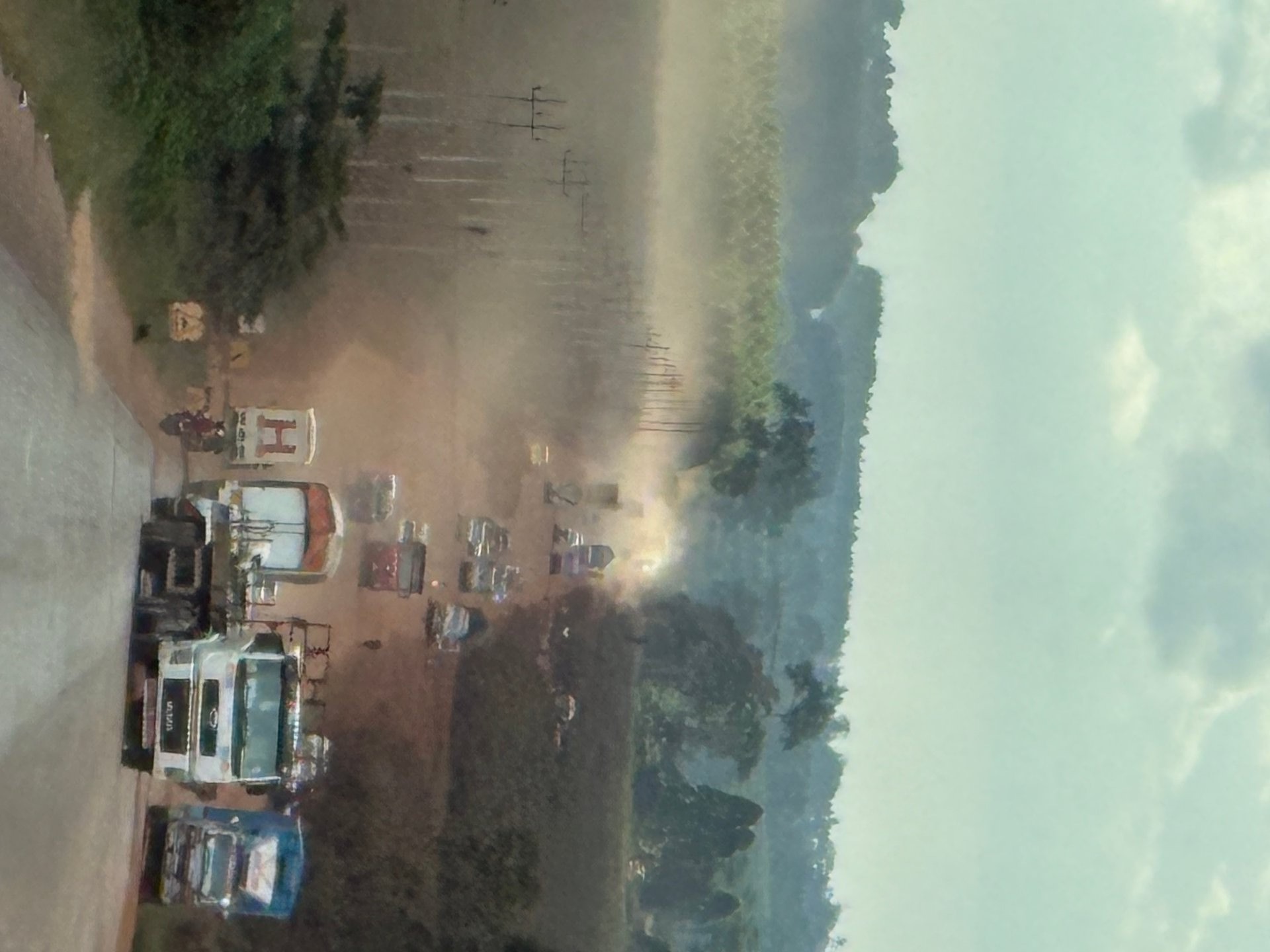
Along the highway, the concentration of fish activity is visible in the form of roadside markets, the smell of smoked and dried fish from processing operations set back from the road, and the regular passage of loaded vehicles heading toward Kampala. The post-harvest quality of fish entering this corridor varies enormously depending on where along the supply chain the fish was handled — well-managed landing sites with icing infrastructure produce very different product quality from sites without it.
Why Infrastructure Determines Quality
The relationship between infrastructure and quality is direct and measurable. Studies of Lake Victoria fish supply chains have consistently found that the availability of ice and cold storage at landing sites is the single strongest predictor of fish quality at the point of urban sale. Landing sites with ice availability lose significantly less fish to spoilage and receive higher prices. The margin is sufficient to cover the cost of ice production and handling, making icing economically rational for fishers who have access to the equipment.
The barrier is not willingness but access. Ice-making equipment requires electricity — either grid connection or reliable generator or solar power. It requires capital to install and maintain. And it requires a sufficient volume of fish passing through the landing site to justify the investment. Small landing sites that handle limited daily volumes cannot support the overhead of ice-making infrastructure without subsidy or collective organisation among fishing community members.
This is why scaling post-harvest facilities from 50 to 300 across Uganda's Lake Victoria shore is a programme-level intervention rather than something the market can do on its own. The economics are right for medium and large landing sites with adequate throughput. They do not work unaided for the smaller sites that collectively handle a significant share of Uganda's total lake catch.
Building 300 Facilities: What the Scale-Up Requires
Getting from 50 to 300 post-harvest facilities by year five requires a clear strategy for site selection, funding, construction, and community ownership. Site selection must balance the economic logic — facilities at higher-volume sites generate more impact per investment — with equity considerations, since many of the communities with greatest need are at smaller, more remote sites. A distribution that prioritises only the largest landing sites reaches the highest volumes but leaves the majority of communities underserved.
Funding models for community-level facilities have evolved on Lake Victoria over two decades of development programming. Pure grant funding builds infrastructure but creates dependence and often results in facilities that are not maintained once the programme ends. Models that require fishing communities to contribute labour, local materials, or partial financing — even at a small percentage — create ownership and accountability that improve long-term maintenance outcomes. Revenue-sharing arrangements, where facilities charge small fees for use that fund maintenance costs, have worked in some contexts and failed in others depending on the strength of local governance structures.
Construction quality matters too. Facilities built to inadequate standards deteriorate rapidly in the humid, salt-laden environment of a lakeside landing site. Corrosion-resistant materials, adequate drainage, structures designed to withstand the seasonal flooding that affects many lakeshore sites — these engineering considerations determine whether a facility remains functional for five years or fifteen.
Connecting Infrastructure to the Broader Value Chain
Post-harvest facilities do not work in isolation. An ice plant at a landing site only generates its full value if fishing boats have ice boxes to carry ice offshore, if buyers arriving at the landing site have insulated transport to maintain the cold chain to market, and if markets have facilities that allow fish to be sold under conditions that preserve the quality improvement achieved at the landing site. Each link in the chain needs to be adequately functional for the investment in any one link to realise its potential.
This systems logic is why post-harvest facility programmes increasingly combine physical infrastructure investment with training for fish handlers, support for cold chain transport, and market linkage activities that connect quality-certified fish from improved facilities to buyers willing to pay the quality premium. The facilities are a necessary condition for quality improvement — they are not a sufficient one.
For the Lake Victoria fishing communities that depend on the lake's productivity for their livelihoods — and for the millions of Ugandans who depend on those communities for affordable fish protein — getting the post-harvest infrastructure right is not a secondary concern. It is as central to sustainable fisheries as managing stock levels and protecting spawning habitat. The lake can produce only what the supply chain can preserve.