Uganda's Tourism Is Concentrated in Four Distinct Regions

Short answer: Uganda's tourism concentrates in four main regions — the southwest (gorilla trekking, Bwindi), the north (Murchison Falls, Ziwa Rhino), the west (Queen Elizabeth, Kibale Forest, Rwenzori), and the Lake Victoria region (Entebbe, Ssese Islands, Jinja). Entebbe International Airport on Lake Victoria's northern shore is the entry point for all international visitors.

According to the Uganda Tourism Satellite Account Report (March 2025), published jointly by the Uganda Bureau of Statistics (UBOS) and the Uganda Tourism Board (UTB), Uganda received growing international visitor numbers in 2023, with 9.4 percent of all foreign arrivals coming from outside Africa — 4.4 percent from Asia, 3.1 percent from Europe, and 1.9 percent from the Americas.

Every single one of those visitors arrived through Entebbe International Airport — directly on the northern shore of Lake Victoria. That makes the lake the geographic anchor of Uganda's entire tourism system, regardless of which region a visitor ultimately travels to.

4 main tourism regions
3,877 km² — Murchison Falls NP
9.4% arrivals from outside Africa (2023)
1 international airport — Entebbe

Source: Uganda Tourism Satellite Account Report, March 2025. UBOS / UTB. Murchison Falls area: UWA.

Where Uganda's Visitors Actually Go

Each region has a distinct character and a different type of traveller. Most Uganda itineraries combine two or three — usually starting and ending at Lake Victoria.

Entry Point · Hub

Lake Victoria Region

Entebbe sits directly on the lake and is where every international flight lands. The region is more than a transit hub — the Ssese Islands, Ngamba Island Chimpanzee Sanctuary, the Source of the Nile in Jinja, and Mabamba Swamp's shoebill storks are all within 2–3 hours of the airport.

  • Entebbe International Airport — only Uganda entry point
  • Ssese Islands — 84-island archipelago, beaches, forest
  • Ngamba Island — chimpanzee sanctuary, 45 min by boat
  • Jinja — Source of the Nile, white-water rafting
  • Mabamba Swamp — most reliable Shoebill Stork spot in Africa
Most Visited · Gorillas

Southwest Uganda

Bwindi Impenetrable National Park, home to over half the world's mountain gorilla population, is Uganda's single biggest draw for international visitors. Gorilla trekking permits (800 USD per person, Stand 2026) are available from four sectors: Buhoma, Ruhija, Rushaga, and Nkuringo. The nearby Mgahinga Gorilla National Park (30 km², the smallest in Uganda) offers a second gorilla trekking option.

  • Bwindi Impenetrable National Park — gorilla trekking
  • Mgahinga Gorilla NP — 30 km², golden monkeys
  • Lake Bunyonyi — one of Africa's deepest lakes
  • Kisoro (approx. 18,000 residents) — gateway town
  • Distance from Entebbe: 8–9 hours by road
Wildlife · Rhinos · Savannah

North Uganda

Murchison Falls National Park — Uganda's largest, at 3,877 km² (UWA) — draws visitors with its dramatic waterfall, Nile boat safaris, and the largest remaining population of Nile crocodiles in East Africa. On the road north from Kampala, the Ziwa Rhino Sanctuary is the only place in Uganda where you can see white rhinos on foot. Masindi, the main gateway town, lies 220 km from Kampala on tarmac road.

  • Murchison Falls NP — 3,877 km², Uganda's largest park
  • Ziwa Rhino Sanctuary — only wild white rhinos in Uganda
  • Masindi — gateway town, 220 km from Kampala
  • Nile boat safaris — hippos, crocodiles, elephants
Chimpanzees · Mountains · Forest

West Uganda

The Rwenzori Mountains National Park (just under 1,000 km²) and Queen Elizabeth National Park anchor Uganda's western circuit. Kibale Forest National Park, established in 1993 near Fort Portal, protects the country's most important chimpanzee habitat. The Semliki National Park (220 km²) adds over 400 bird species and hot springs on the Congo border.

  • Kibale Forest NP — best chimpanzee tracking in Uganda
  • Queen Elizabeth NP — tree-climbing lions, boat safaris
  • Rwenzori Mountains NP — ~1,000 km², glaciated peaks
  • Semliki NP — 220 km², 400+ bird species
  • Fort Portal — main hub for western circuit

A Rhino Encounter at Ziwa — On the Road North

During our two-week Uganda trip in January 2026, we stopped at the Ziwa Rhino Sanctuary on the drive north to Murchison Falls. It turned out to be one of the most memorable moments of the entire journey.
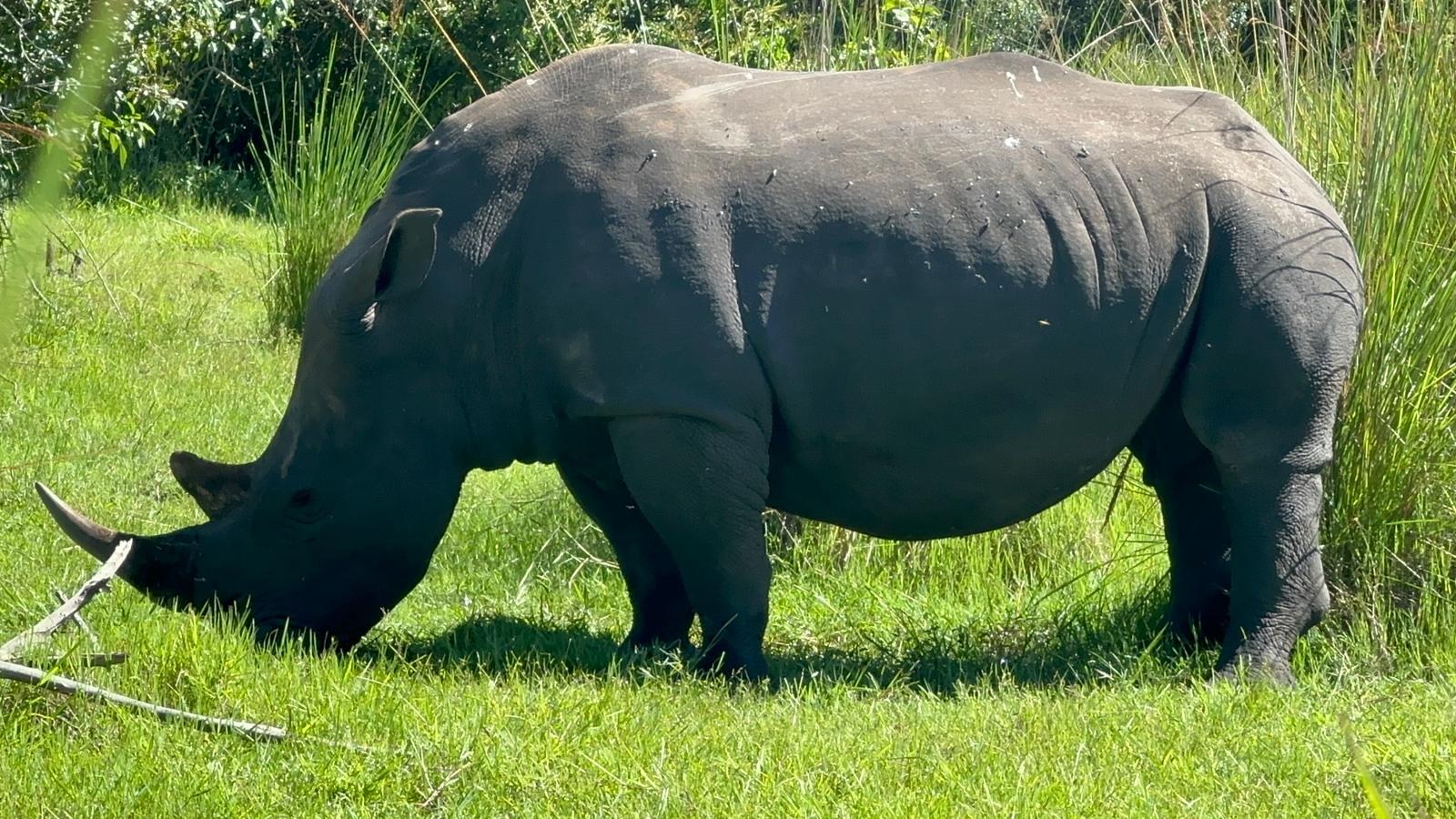
White rhino grazing at Ziwa Rhino Sanctuary Uganda. Photo: Mark Suer.
White rhino at Ziwa Rhino Sanctuary, central Uganda. Photo: Mark Suer, January 2026.

We joined a guided bush walk — just us and a ranger, on foot, in open grassland. Then a rhino appeared. There is no other way to describe it: the animal is enormous. It was alone, head down, grazing quietly. The sheer size and weight of the creature, the calm indifference it showed to our presence, was something that photographs simply cannot convey.

The Ziwa Sanctuary is the only place in Uganda where you can see white rhinos in the wild. It sits directly on the main road between Kampala and Murchison Falls — about 3 hours north of the capital — making it a natural stop that adds almost nothing to the driving time. For anyone doing the northern circuit, skipping Ziwa would be a genuine mistake.

Photos taken on foot, guided walk, Ziwa Rhino Sanctuary. January 2026.
Why Every Uganda Journey Starts and Ends at Lake Victoria

Entebbe International Airport sits on a peninsula jutting into Lake Victoria. When you land in Uganda, the lake is literally the first thing you see out of the window. When you leave, it is the last. For this reason alone, the lake deserves more than a transit stop — and most visitors who spend even a day in Entebbe discover that.

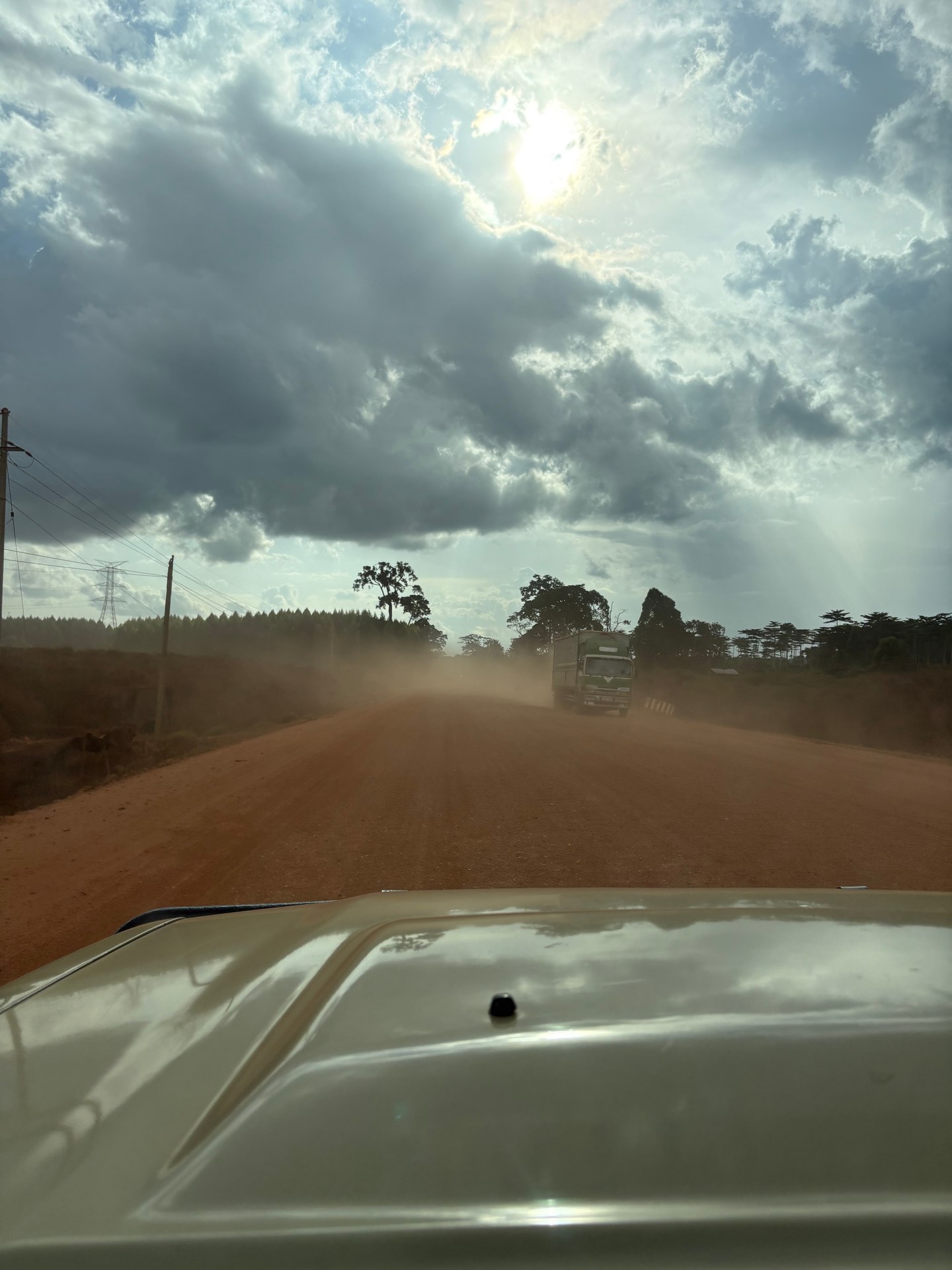
Red laterite road through rural Uganda. Photo: Mark Suer.
On the road in Uganda — laterite roads connect the tourism regions. Photo: Mark Suer.

The 7-day Uganda itinerary that works best starts with one or two nights at the lake — day trips to Ngamba Island or Mabamba Swamp, a morning at the Entebbe Botanical Gardens — before heading into gorilla country or north towards Murchison. That opening at the lake grounds the whole trip.

The best time to visit Lake Victoria aligns almost exactly with the best time for Uganda wildlife generally: June to September (primary dry season) and December to February (secondary dry season). Plan those windows and both the lake and the national parks deliver.

Uganda Tourism by Region — Your Questions Answered

Which region of Uganda attracts the most tourists?

Southwest Uganda — home to Bwindi Impenetrable National Park and gorilla trekking — is Uganda's most visited tourism region. The Lake Victoria region around Entebbe is the main entry and exit point for all international visitors.

What is the best starting point for exploring Uganda?

Entebbe, on the northern shore of Lake Victoria, is where all international flights arrive. From here you can reach gorilla country (Bwindi) in 8–9 hours, Murchison Falls in 5–6 hours, and the Ssese Islands by ferry from Nakiwogo pier.

Is the Ziwa Rhino Sanctuary worth visiting?

Yes — it is the only place in Uganda where you can see white rhinos on foot. It lies on the main road between Kampala and Murchison Falls, making it a natural stop on any northern Uganda itinerary. Guided bush walks run in the early morning.

How far is Murchison Falls from Kampala?

Around 305 km north of Kampala — approximately 5–6 hours by road via Masindi, which is 220 km from Kampala on tarmac. The park covers 3,877 km² and is Uganda's largest national park (UWA).

Can you combine gorilla trekking with Lake Victoria?

Yes — most Uganda itineraries do exactly this. Fly into Entebbe (Lake Victoria), spend a day at the lake, drive or fly to Bwindi for gorilla trekking, then return via Kampala. A 7-day itinerary covers both comfortably.

Ready to Explore Uganda's Regions?

Misty Gorilla Expeditions is a local Uganda specialist based in Buhoma — covering gorilla trekking, Lake Victoria, Murchison Falls, and the full Uganda circuit.

Plan Your Uganda Journey

Explore Further