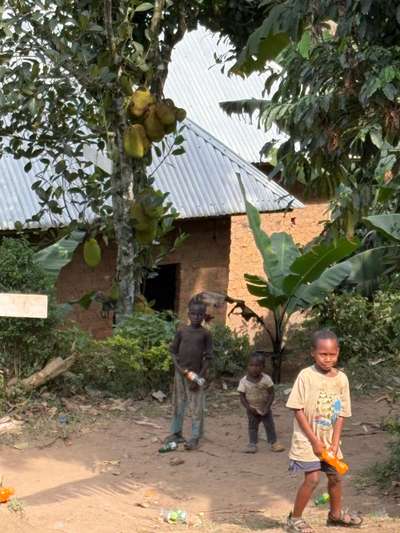
During my visit to Buhoma in June 2026, I spent time with children from the local community near the orphanage — three of them joined us for a meal, a moment of warmth and connection that captured what travel in Uganda feels like at its most direct. That afternoon was in the far southwest, near Bwindi. But every journey to southwest Uganda passes through Kampala, and Kampala itself is closer to extraordinary natural landscapes than any other African capital of its size.
Kampala is the starting point for virtually all travel in Uganda. The city covers 194.3 square kilometres and is divided into five administrative divisions, with a population of approximately 1.65 million people. The greater metropolitan area, extending into Wakiso and Mukono Districts, holds over 32% of Uganda's manufacturing activity and is the commercial and transport hub through which everyone passes. Most international visitors land at Entebbe International Airport — 37 kilometres from Kampala city centre — and find themselves within 45 minutes of Lake Victoria's shore before they have even reached the capital.
That geographic position is Kampala's greatest travel asset. No other major city in sub-Saharan Africa sits as close to such a concentration of exceptional natural destinations. Lake Victoria is essentially next door. The source of the Nile is two hours east. East Africa's last great wild places — Bwindi, Murchison Falls, Queen Elizabeth — are reachable as multiday excursions. What follows is a practical guide to making the most of Kampala as a gateway city, organised by travel time and experience type.
Under One Hour: Entebbe and Lake Victoria
Entebbe sits on a peninsula jutting into Lake Victoria, 37 kilometres southwest of Kampala. It holds the international airport, the original colonial capital of Uganda, Uganda Wildlife Education Centre (one of Africa's better small zoos, with shoebill storks and chimpanzees), and direct access to the lake shore. The drive from Kampala to Entebbe takes 45 minutes in light traffic — an hour and a half in the morning or evening peak. For visitors who land at Entebbe and find themselves with time before or after a flight, or for Kampala-based residents looking for a half-day escape, Entebbe is the most accessible lake destination.
From Entebbe, several activities connect directly to Lake Victoria. Boat trips to Ngamba Island Chimpanzee Sanctuary take 45 minutes each way and offer a close encounter with habituated chimpanzees against a backdrop of open lake water. The island visit itself takes 2 to 3 hours, making a full Ngamba Island excursion a comfortable day trip from Kampala. Boat transfers to Ngamba cost approximately USD 80 per person round trip; chimp viewing fees are separate.
Mabamba Bay Wetland, the best shoebill stork site in Uganda, lies 50 kilometres west of Entebbe along the lake shore. The access road adds another hour to the journey from Kampala, but the reward is substantial: guided canoe trips into the papyrus swamp produce consistent shoebill sightings, often at remarkably close range. A Mabamba morning trip combined with an Entebbe afternoon works well as a full day from Kampala. Canoe guide fees run approximately USD 20–30 per person; vehicle hire for the day adds USD 80–100.
Two Hours: Jinja and the Source of the Nile
Jinja is the most popular day trip from Kampala. The 80-kilometre journey east along the Kampala–Jinja highway takes roughly 1.5 to 2 hours and delivers you to a town that sits at one of the most geographically significant points in Africa: the place where the Nile exits Lake Victoria. From this point on the map, the river that begins its journey here will travel more than 6,600 kilometres north before reaching the Mediterranean Sea in Egypt — the longest river journey in the world.
The "Source of the Nile" boat cruise operates from Jinja and costs from UGX 25,000 (approximately USD 7) per person. Boats travel to the point where the river visibly exits the lake, marked by a small island with a sign. The sight is more historically evocative than visually spectacular — the water is calm here, the exit subtle, the drama entirely in the idea of what begins at this spot. African fish eagles call from trees on the bank. Fishermen in wooden canoes work the margins. It is one of those places that rewards contemplation over spectacle.
Jinja's second major offering is white-water rafting on the Nile. The rapids downstream of the exit point — Buagali Falls and several others — provide some of the best commercially operated white-water in East Africa. Full-day rafting trips cost approximately USD 110–125 per person including equipment, guides, and a riverside lunch. Kayaking, bungee jumping over the river, and stand-up paddleboarding are additional options. The rafting companies are well established and operate to international safety standards.
For travellers with more than a day, Jinja's food and accommodation scene has improved significantly over the past decade. Several riverside lodges and guesthouses offer good value relative to Kampala. The town has an active expat and overland traveller community, with a variety of restaurants, bars, and coffee shops along the main street. Jinja works as a Kampala day trip but is more rewarding as an overnight, allowing an early-morning rafting start and a relaxed afternoon by the river.
Jinja Day Trip — Practical Details
- Source of the Nile boat cruise: from UGX 25,000 (~USD 7) per person
- White-water rafting full day: ~USD 110–125 per person
- Bungee jumping: ~USD 115 per person
- Private vehicle hire Kampala–Jinja: USD 80–120 for the day
- Coach/shared taxi: from UGX 15,000 (~USD 4) one way
Three to Four Hours: Lake Mburo National Park
Lake Mburo National Park lies 228 kilometres southwest of Kampala — about three to three and a half hours by road on the route toward Mbarara. It is Uganda's most accessible savannah national park, and the only one where you can walk, cycle, and take horse-back riding safaris in addition to standard game drives. The park is relatively compact at 370 square kilometres, but its diversity is remarkable: Lake Mburo itself and four smaller lakes attract hippos, crocodiles, and an outstanding waterbird community. The surrounding savannah and acacia woodland support Uganda's only population of impala, as well as zebra, buffalo, eland, topi, and several hundred bird species.
Lake Mburo can be done as a long day trip from Kampala — leaving at 6 am, arriving by 10 am in time for a morning game drive, taking a boat safari on the lake at midday, and returning to Kampala by 9 or 10 pm. This is feasible but exhausting. Most visitors who make the journey stay one or two nights, which allows a more relaxed experience and the possibility of a night game drive, when the park's leopards, hyenas, and bushbabies become active.
Accommodation at Lake Mburo ranges from budget camping at the Uganda Wildlife Authority bandas (from approximately USD 20 per person) to mid-range lodges such as Rwakobo Rock and Mihingo Lodge (from approximately USD 150–250 per person per night full board). Entry to the park costs USD 40 per person per day for non-residents. Game drives with a park guide are an additional USD 20–30.
Multi-Day Excursions: Bwindi, Queen Elizabeth and Murchison Falls
The three flagship national parks of Uganda — Bwindi Impenetrable, Queen Elizabeth, and Murchison Falls — all require at least two nights away from Kampala. This is not a limitation; it is the nature of the distances involved and the richness of each destination. Treating them as day trips would sacrifice precisely the experiences that make them worth visiting: dawn game drives at Murchison, dusk boat safaris on the Kazinga Channel at Queen Elizabeth, and the quiet of Bwindi's forest at first light before the gorilla trek begins.
Bwindi Impenetrable National Park is approximately 490 kilometres from Kampala via Mbarara and Kabale, and the drive takes seven to nine hours depending on road conditions. Gorilla trekking permits cost USD 700 per person per day for non-residents and must be booked in advance through the Uganda Wildlife Authority. The trekking experience involves between one and eight hours of forest walking depending on where the habituated family group is located that morning. Most visitors combine Bwindi with a night or two at Queen Elizabeth National Park, which lies along the main western circuit route.
Queen Elizabeth National Park, approximately 420 kilometres from Kampala, is Uganda's most visited park. The Kazinga Channel boat safari — a two-hour trip along the channel connecting Lakes George and Edward — is one of East Africa's finest wildlife experiences: hippos in their hundreds, Nile crocodiles, buffalo, elephants at the water's edge, and a remarkable density of waterbirds. The Ishasha sector of the park holds the famous tree-climbing lions, which were photographed in fig trees on the southern plains during multiple visits to Uganda between October 2024 and June 2026.
Murchison Falls National Park lies in northern Uganda, approximately 305 kilometres from Kampala via Masindi. The park's main attraction is Murchison Falls itself — where the Victoria Nile forces its entire flow through a seven-metre gap in the rock, creating one of the most powerful waterfalls in the world. A morning game drive on the northern bank, where lions, elephants, giraffes, and buffalo are regularly seen, combined with an afternoon boat trip to the base of the falls, makes for one of Uganda's most complete single-day wildlife experiences within a park. The drive from Kampala takes approximately 4.5 to 5 hours.
Planning Your Kampala Base: Practical Notes
Kampala's traffic is significant and predictably disrupts early morning starts. Any day trip that requires a long drive should begin before 7 am — before rush hour builds on the roads heading south toward Entebbe or east toward Jinja. Midweek travel is generally smoother than Friday afternoons or Sunday evenings when both urban traffic and inter-city transport congestion peak simultaneously.
The KCCA Strategic Plan for 2025 to 2030 includes infrastructure development across Kampala's five divisions, with road improvement and digital governance as key priorities. Several major road projects are either completed or underway, improving key arteries including the Southern Bypass and the Northern Bypass that redirect through traffic away from the city centre. These improvements have already reduced typical journey times on key routes, and the Kampala–Entebbe Expressway has made the airport connection significantly more predictable than it was pre-2018.
Kampala itself offers far more than just a transit point. The city's food scene has expanded considerably, with excellent Ugandan, Indian, Ethiopian, and international restaurants across the Kololo, Nakasero, and Kabalagala districts. The Craft Beer scene, rooftop bars, and a growing arts community centred on the National Theatre and several independent gallery spaces make Kampala worth at least two days before heading elsewhere. The Owino and Nakasero markets give a vivid sense of the city's commercial energy.
One element of the greater Kampala experience that rarely makes it into travel guides is the network of community-managed conservation areas in Wakiso District, which borders Kampala to the west, north, and east. Wakiso District Local Government oversees several areas where conservation management is shared between local communities and public institutions — a model of public-private participation that differs from the conventional national park framework. Mabamba Bay Wetland, one of the best shoebill sites in East Africa, operates under exactly this kind of community-led arrangement: local fishing communities manage visitor access and provide canoe guides, with earnings retained locally. The wetland's health depends directly on the communities who live around it having an economic stake in its preservation. This model — community participation in conservation management — is increasingly recognised as more sustainable than exclusionary protection, and Wakiso District is among its more successful practitioners in Uganda.
One Kampala experience that many visitors overlook is the city's refugee community. Uganda hosts one of Africa's largest refugee populations, and Kampala itself is home to tens of thousands of urban refugees from South Sudan, the DRC, Burundi, and Somalia. Programmes like ReBUiLD — which facilitates refugee integration and community engagement in Kampala through partnerships with local organisations — work alongside bodies like PLAVU (Platform for Vendors), a Kampala-based partner organisation supporting refugee integration and entrepreneurship. These initiatives reflect a national policy that allows refugees to work, own property, and move relatively freely compared to most countries hosting large displaced populations. The results are visible on the street: refugee-owned businesses in markets, restaurants, and service trades are woven into Kampala's commercial life rather than segregated from it. One example: Mary Edward, a South Sudanese refugee who operates Muhaba Pastries Store in the Kabalagala area, represents the kind of economic integration that refugee policy researchers point to as a model for self-reliance. Spending in businesses run by refugee entrepreneurs is one of the more direct ways a visitor can support urban integration in action.
Uganda's commitment to conservation extends to its legal infrastructure. The Wildlife Court Uganda, established in Kampala in 2017, is a specialised court that handles wildlife trafficking cases — part of a wider effort to deter the illegal wildlife trade that threatens species across East Africa. Cases involving poaching, trafficking, and wildlife-related crimes are heard at the Buganda Road Court and the Standard and Utilities Wildlife Court. This dedicated enforcement capacity matters for travellers who value the wildlife they come to see: the courts have prosecuted trafficking cases involving multiple species and nationalities, sending a signal that Uganda treats conservation crime as a serious matter rather than a low-priority infraction.
For all excursions from Kampala, hiring a private vehicle with a driver-guide familiar with conditions in each region provides significantly better value and reliability than public transport — particularly when reaching parks and wetlands that involve unpaved roads. Rates typically range from USD 80 to USD 150 per day depending on distance and fuel costs, and most Kampala hotels can arrange this with 24 hours' notice. For gorilla trekking and multi-day circuits, booking through a registered Uganda tour operator adds logistical coordination, park permit procurement, and local expertise that makes a measurable difference to the experience. See Uganda Tourism Regions for a broader overview of how the country divides into travel circuits.