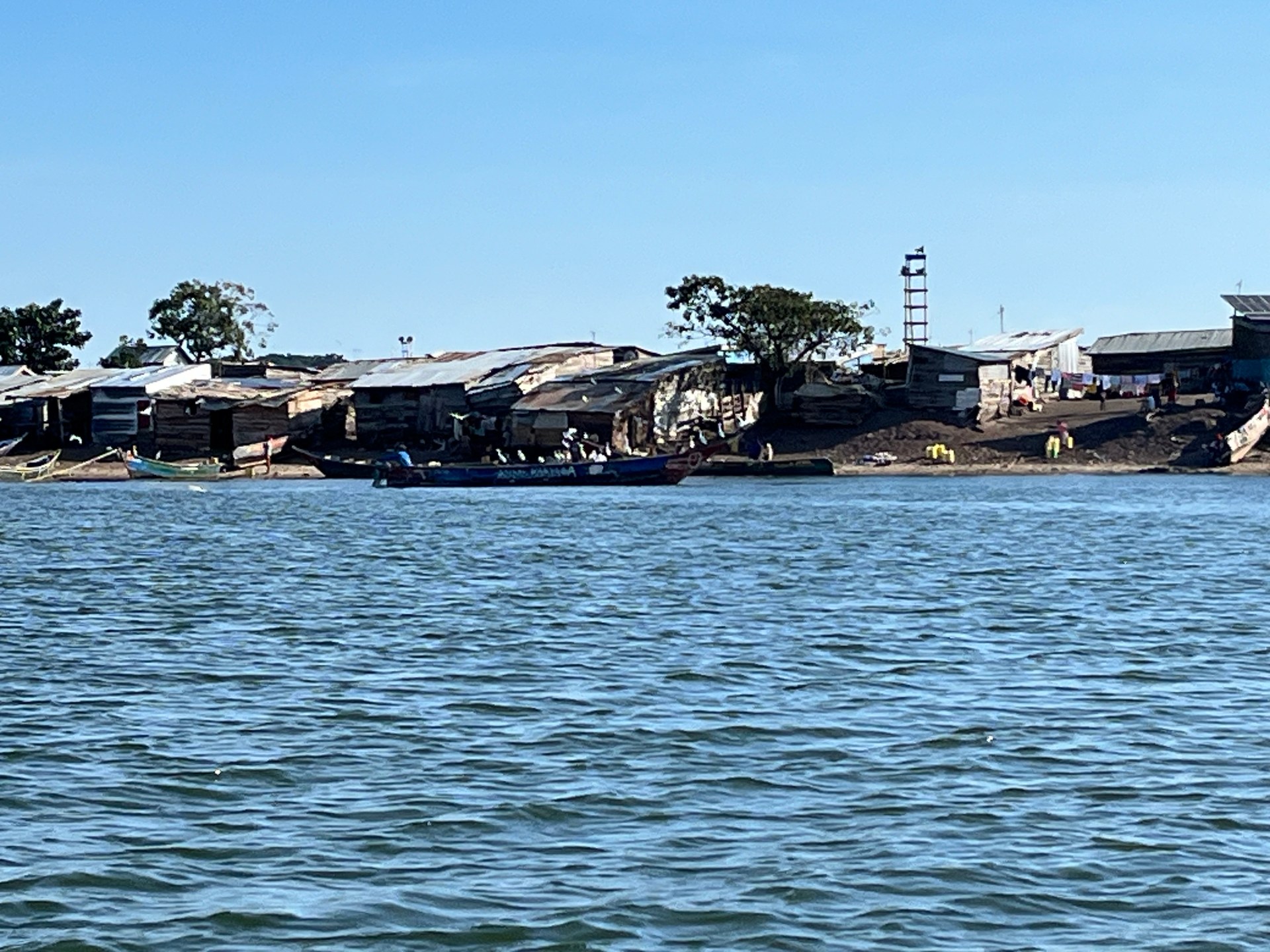
Somewhere mid-lake, on the boat journey from Entebbe to Ngamba Island in October 2024, we passed an island that most visitors never stop at. It was small — perhaps five hundred metres across — and its shoreline was a row of wooden fishing boats pulled up beside simple iron-roofed houses. No electricity, no running water, no road connecting it to anywhere. Viewed from the water, the settlement was entirely alive: people moving, boats being repaired, drying racks loaded with small silver fish. Lake Victoria supports an estimated 200,000 fishermen on the Ugandan side alone, and this island was a precise, unmediated image of what that figure means in practice.
That observation, made during my 5-day visit across the northern lake shore in October 2024, captures something that official statistics struggle to convey: Lake Victoria is not primarily a tourist attraction. It is a working body of water — the largest lake in Africa at 68,800 square kilometres, shared between Uganda, Kenya and Tanzania — that produces food, income and transport for millions of people who have no alternative. The question of how tourism fits into that reality, and how both tourism and fishing can be managed without destroying the resource both depend on, is what this article addresses.
Sustainable tourism and fisheries management at Lake Victoria are not separate discussions. They draw on the same water, compete for the same shoreline space, and are vulnerable to the same threats: pollution, invasive species, falling water levels, and the steady erosion of the wetland buffers that keep the lake healthy. Understanding one requires understanding the other.
Fisheries at Lake Victoria — Who Catches What and Under What Rules
The commercial fishery of Lake Victoria is built around three species: Nile perch (Lates niloticus), tilapia and mukene (Rastrineobola argentea). Nile perch fillets are exported to European and Asian markets. Tilapia feeds regional urban markets. Mukene — the small sardine-like fish dried in quantity along the lake's shores — provides affordable protein for communities across Uganda and neighbouring countries. NAFIRRI, the National Fisheries Resources Research Institute based in Jinja on the lake's northern shore, monitors stock levels and provides the scientific basis for fisheries management decisions.
Uganda's current fisheries legal framework is set by the Fisheries Act 2022, which updated the previous legislation and expanded provisions for community involvement in fisheries governance, aquaculture licensing, and biodiversity protection across Uganda's lakes and rivers. [RECHERCHE NOETIG: specific enforcement provisions and current stock assessment data from NAFIRRI.] The Act recognised what NAFIRRI's monitoring data has been showing for years: that Lake Victoria's fish stocks are under sustained pressure from overfishing, habitat degradation and water quality decline, and that a purely export-focused commercial approach is not compatible with the long-term productivity of the lake.
Aquaculture has expanded into this space. Cage fish farming — wire mesh enclosures anchored in the lake where fish are raised to harvest size — has grown significantly on Lake Victoria's Ugandan section. Tilapia is the primary aquaculture species. The sector is regulated under the Fisheries Act 2022 and requires licensing. [RECHERCHE NOETIG: current number of licensed aquaculture operations on Lake Victoria.] For visitors to the lake, aquaculture cages are a visible feature of the nearshore landscape around Entebbe and parts of the Ssese Islands — an industry operating on the same water that tourists cross to reach Ngamba Island.
The traditional artisanal fishery continues alongside these commercial and aquaculture operations. The men and women on that small island we passed in October 2024 — repairing boats, processing mukene, maintaining nets — represent the fishing economy that predates both Nile perch and aquaculture. [QUOTE: Fisher on the relationship between traditional and commercial fishing at Lake Victoria.] This sector operates under increasing pressure: declining catches, rising costs of kerosene for engine-powered boats, and competition from larger commercial vessels working the same grounds.
Waste, Water Quality and the Urban Edge of the Lake
Kampala, Uganda's capital, sits on the northern shore of Lake Victoria and generates approximately 65% of Uganda's national GDP (Multi-Hazard Risk and Vulnerability Profile, 2018). That economic concentration has a direct environmental cost. The city's wetlands — which form a natural buffer between its urban core and the lake — have been documented as receiving medical and non-biodegradable waste deposits that pose a contamination risk to surface water sources, including Lake Victoria itself (Multi-Hazard Risk and Vulnerability Profile, 2018).
Water hyacinth, the invasive aquatic plant that has periodically sealed portions of the lake's Ugandan shoreline since the 1980s, is most heavily concentrated in Murchison Bay — specifically in the Ggaba, Salama and Buziga areas of Kampala's Makindye Division, and in the Luzira area of Nakawa Division (Multi-Hazard Risk and Vulnerability Profile, 2018). The plant's dominance in these areas is not coincidental: Murchison Bay receives the greatest nutrient loading from Kampala's drains and waterways, providing exactly the conditions water hyacinth needs to grow at maximum speed. The plant displays all the classic characteristics of a successful invasive: rapid growth, fast reproduction, high dispersal capacity, phenotypic plasticity, and a track record of successful invasion across multiple water bodies worldwide (Multi-Hazard Risk and Vulnerability Profile, 2018).
Uganda's Waste Management Regulations, S.I. No. 49 of 2020 — 109 regulations across 16 schedules — provide the current legal framework for controlling industrial and municipal waste flows that affect the lake. The regulations were enacted on 11 October 2019 under the National Environment Act, 2019. Businesses and institutions near the lake are required to maintain environmental compliance audits under a parallel set of regulations (S.I. No. 47 of 2020), with audit reports submitted every three years. For the tourism sector specifically, all luxury camps, lodges, hotels and beach facilities operating near wetlands or within wildlife conservation areas are legally required to hold current environmental compliance audits before they can operate.
For the visitor, these regulatory frameworks are largely invisible. What is visible is the water quality difference between managed and unmanaged shoreline areas: the clear water at Entebbe's Lido Beach versus the algae-green shallows near urban drains; the healthy papyrus wetlands along the Ssese Islands' undeveloped shores versus the degraded margins closer to landing sites with no waste management infrastructure. Uganda has shifted its environmental governance approach from reactive emergency response toward proactive disaster risk management (Multi-Hazard Risk and Vulnerability Profile, 2018) — a policy change that affects lake management as much as it affects flood response.
Conservation Tourism at Lake Victoria — What It Looks Like in Practice
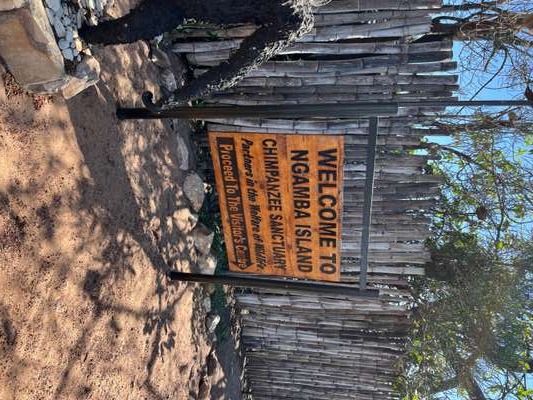
The most developed example of conservation tourism on Lake Victoria is Ngamba Island Chimpanzee Sanctuary, reached by a 45-minute boat crossing from the Entebbe waterfront. Approaching the island from the water in October 2024, the first thing I noticed was the welcome sign: hand-painted in warm tones, the words "Ngamba Island Chimpanzee Sanctuary" set against weathered wood. The welcome was, as the sign suggested, genuine. The island operates as a working rescue and rehabilitation centre managed by the Chimpanzee Sanctuary and Wildlife Conservation Trust (CSWCT), and visitor fees contribute directly to the operating costs of maintaining around 50 rescued chimpanzees on the island's 98 acres of forested territory.
The sanctuary's enclosure fence — a robust metal structure that marks the boundary between the visitor area and the chimpanzees' forest territory — is one of the more striking pieces of infrastructure I have encountered in Uganda. It does not look welcoming. It looks industrial. But the context changes what it means: the fence is not confining the chimpanzees to a small enclosure. It marks the edge of the visitor-accessible zone; behind it lies 98 acres of island forest in which the chimpanzees live freely. The fence is for people, not primates.
Ngamba Island works as conservation tourism precisely because the visitor experience and the conservation mission are genuinely aligned. Visitors pay to cross the lake and observe the feeding session; that payment funds the veterinary care, the staff, the boats, the infrastructure that keep the sanctuary running. There is no artificial staging here — the chimpanzees are rescued animals living in a real forest, not performing for cameras. The lake crossing itself is part of the experience: the open water, the fishing islands visible in the distance, the humidity and the size of the horizon.
Beyond Ngamba Island, conservation tourism at Lake Victoria is less formally structured. The Mabamba Bay wetlands near Entebbe — home to the shoebill stork, one of the most sought-after birds in Africa — offer guided canoe excursions through papyrus swamps that double as scientific monitoring sites for wetland health. The Ssese Islands contain protected forest reserves managed under the National Forestry Authority where community tourism operations have been established. Uganda is planning 20 new landing sites and piers around the lake's Ugandan shore to improve both transport and tourism access — infrastructure that could expand conservation tourism significantly if developed with environmental compliance requirements built in from the start.
How Land Use Around the Lake Shapes Its Future
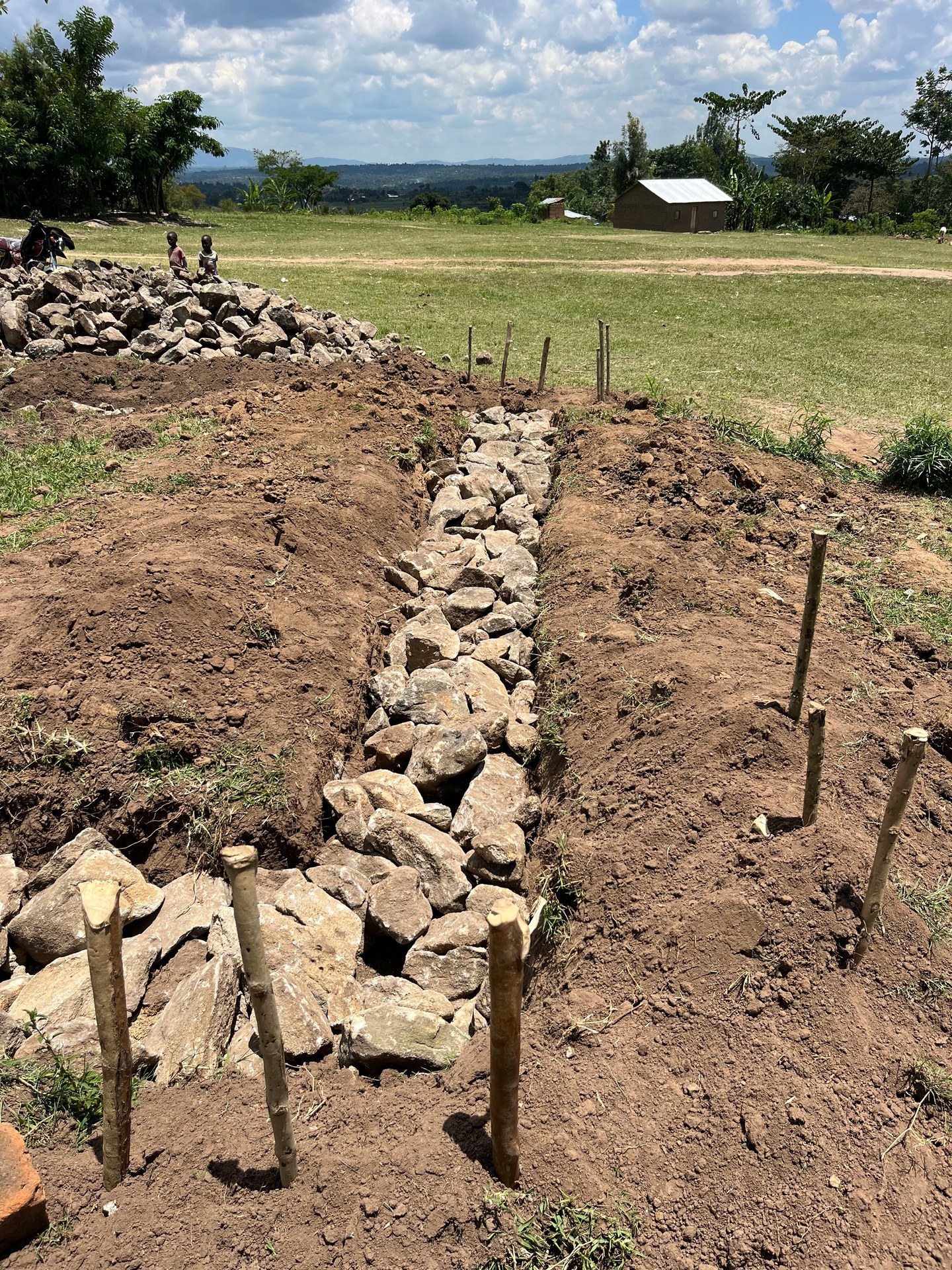
Every decision made about land use within Lake Victoria's catchment area eventually shows up in the lake's water. The stone terracing photographed in the Ugandan highlands in October 2024 — careful rows of stacked stone forming contour barriers on a hillside farm — represents exactly the kind of low-technology, high-effectiveness intervention that reduces erosion and slows runoff before it reaches rivers that flow into the lake. Water and wind erosion together account for approximately 84% of global land degradation (Multi-Hazard Risk and Vulnerability Profile, 2018), and in Uganda's highlands, where soils are inherently low in fertility and steep slopes are farmed under rain-fed conditions, the difference between a terraced field and an unterraced one can be the difference between a productive farm and a gully.
The connection between highland land use and lake health is not metaphorical — it is hydraulic. Eroded soil travels in suspension in rainwater runoff, moves into rivers, and deposits in the lake where it increases turbidity, buries aquatic vegetation, and fills the shallow nearshore zones where juvenile fish spend their early weeks. In a lake where fish stock recovery is already hampered by water hyacinth, overfishing and oxygen depletion, additional sediment loading from eroded catchments is not a marginal stress — it is a compounding one.
The UNDP has been supporting Uganda's Office of the Prime Minister in developing multi-hazard risk and vulnerability profiles for 111 districts since 2013 — a programme that covers erosion risk mapping, flood modelling and environmental baseline data collection across the country (Multi-Hazard Risk and Vulnerability Profile, 2018). This district-level data provides the foundation on which catchment-scale interventions for Lake Victoria can be planned. A visitor arriving in Entebbe today, flying over the lake's green shoreline on approach from Addis Ababa, sees the result of decades of agricultural intensification in that catchment — the red laterite roads cutting through green hills, the farms running to the water's edge, the sediment plumes visible in the shallows. They also see a lake that is still there, still functioning, still capable of producing the fish and supporting the communities that depend on it. Whether that remains true in fifty years depends significantly on the decisions being made now about land use, waste management, and the governance of a resource that belongs to three countries and affects tens of millions of people.